
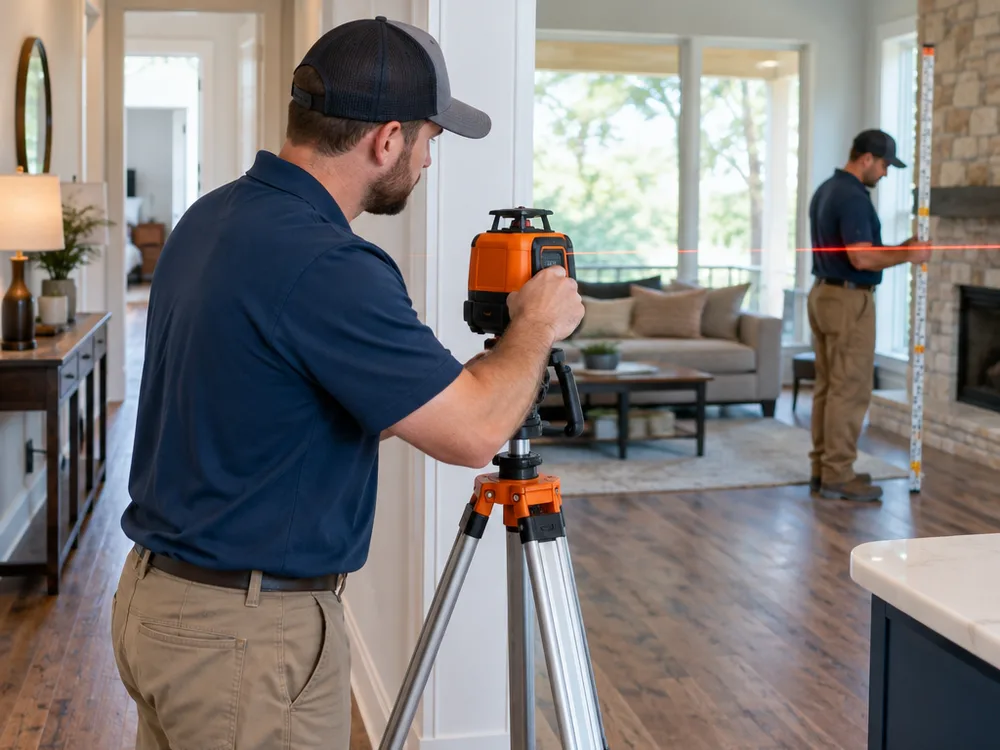
Floor elevations
Readings across the house show the pattern of movement, which tells us where support is needed.
West Lake Hills & Rollingwood
Sticking doors or new cracks in West Lake Hills or Rollingwood? We measure, explain the cause, and put the plan in writing.
West Lake Hills and neighboring Rollingwood sit just west of central Austin, where the soil is often thin over limestone rather than deep clay. Foundation movement here usually comes from drainage, how a lot was built up, and how the house and any additions were built, so that is where we start.
We measure, explain, and put the plan in writing. You can read more about our approach on our foundation repair overview.
Signs worth a closer look:
A good repair plan comes from understanding why the house moved, not just where it cracked.
Readings across the house show the pattern of movement, which tells us where support is needed.
Gutters, downspouts, and the slope of the yard decide where water sits after a storm.
Additions built at different times can move differently from the original house. We check where they meet.
Slab and pier-and-beam homes are repaired differently, so we confirm what you have before recommending anything.
Once we know the cause, the written scope will spell out the work. Common repairs include:
Yes. Rollingwood and West Lake Hills are both part of our regular service area.
Yes. Access is part of the plan, and the written scope notes any landscaping, decking, or flatwork that affects where support can go.
Floor elevation readings, a look at cracks and openings inside and out, and notes on drainage around the house, followed by a plain-language explanation.
Call (737) 245-0220. We will set up a time to look at the house and talk through what we find.
We serve homes throughout West Lake Hills and Rollingwood.
Tell us what you are seeing at the house. We will measure, explain what is moving, and give you a written repair plan.