
Clear, written findings
You receive a plain-language summary of the observed symptoms, where they show up, and what they usually indicate when viewed together.
Serving Austin, Texas & surrounding areas
If you are seeing cracks, sticking doors, or uneven floors, a proper inspection gives you a clear, written snapshot of what is happening and what to do next, before you spend money on the wrong fix.
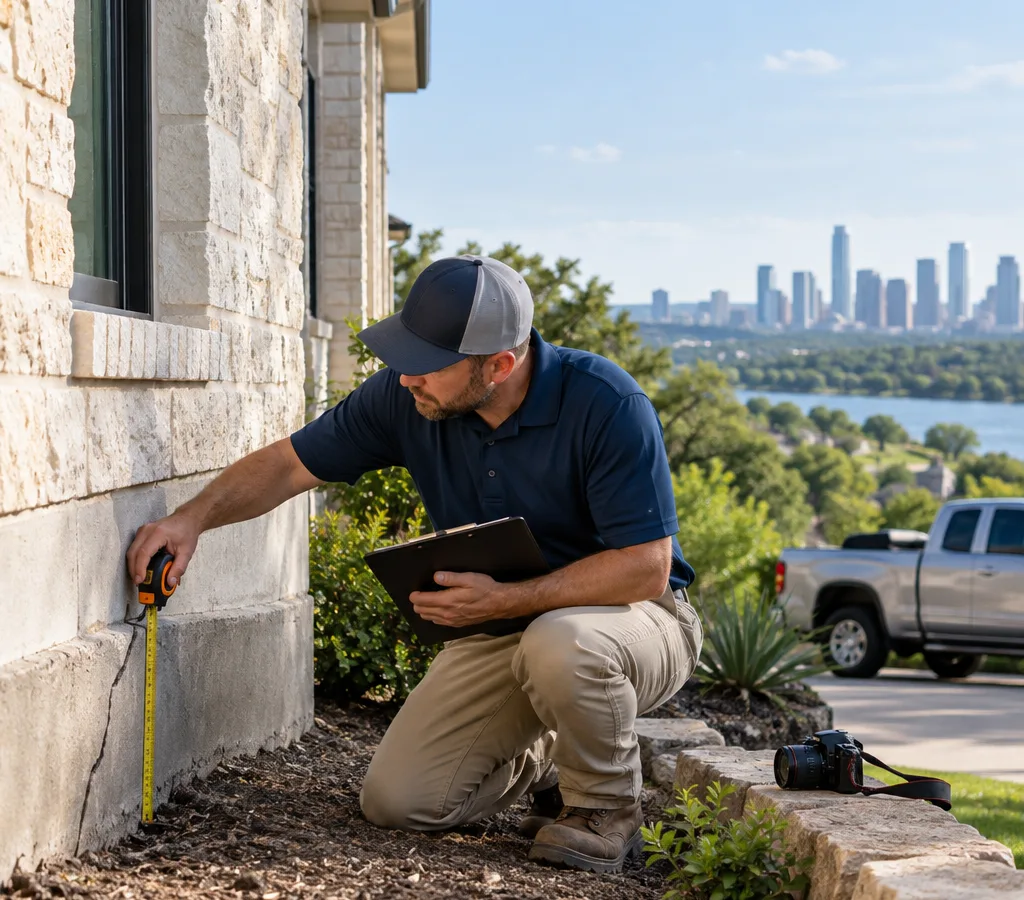
A foundation inspection in Austin is most useful when you need a decision backed by observations, measurements, and plain-language guidance. Homeowners and property managers usually reach out after they notice movement-related symptoms, before a real estate transaction, or after a big change such as plumbing repairs or drainage work.
Common reasons to book an Austin foundation inspection:
In Austin, many homes are built on slabs, and small changes in elevation can show up as finish cracking and sticking openings. A good inspection separates cosmetic issues from movement that needs attention, and it calls out related items like surface drainage, downspout discharge, and grading that can make movement worse over time.
If you are starting your search because you suspect movement, this is the right first step. If you already have a scope and are comparing solutions, our team at Foundation Repairs Austin TX can also walk through repair options after the inspection findings are clear.
A foundation inspection Austin clients trust should be more than a quick look at a few cracks. The goal is to document conditions, measure what can be measured on-site, and connect the symptoms you see to likely causes.
Typical items we review during a foundation inspection in Austin TX:
What an inspection does not do: it does not replace a structural engineering design, and it does not predict the future with certainty. It gives you a defensible snapshot of current conditions and the most practical next step, whether that is monitoring, improving drainage, getting a licensed plumber to test for leaks, or moving toward repair planning.

You receive a plain-language summary of the observed symptoms, where they show up, and what they usually indicate when viewed together.
We collect floor level readings to identify patterns instead of guessing from cracks alone. Patterns help separate localized issues from broader movement.
If repair is warranted, we outline practical options and what each one is meant to correct. If repair is not warranted, we say that too.
We document grading, downspout discharge, and other site conditions that commonly aggravate movement, so you can address the causes, not only the symptoms.
We photograph key indicators so you can track changes over time or share the information with other professionals if needed.
A measured process connects visible symptoms with elevation data and gives you a written plan for what should happen next.
We ask what you have noticed, when it started, and what you need the inspection for (peace of mind, purchase decision, scope confirmation, or planning).
We review the interior and exterior for movement indicators, paying attention to crack patterns, openings, and any areas with recent repairs or water exposure.
We take floor level measurements at consistent points, note patterns, and document conditions with photos and field notes.
Before we leave, we walk you through what we saw, what the measurements indicate, and what the next best step is for your situation.
You receive a report you can reference later, including the findings, any recommended monitoring, and repair guidance when appropriate.
A foundation inspection in Austin typically ranges from $200 to $600 for a standard single-family home, depending on home size, accessibility, and how much elevation mapping is needed. More complex properties or inspections with limited access can run higher.
Pricing mainly changes with square footage, number of levels, whether the slab edge is visible, crawlspace access (when present), and how much documentation you need for a transaction. The exact cost is confirmed after we learn the property details and the inspection goals.
Most foundation inspection Austin appointments take about 60 to 120 minutes on site, then additional time to compile the written report. Larger homes, limited access, or detailed elevation mapping can extend the visit.
Yes. The first takeaway from an austin foundation inspection should be a clear recommendation: monitor, address site drainage or plumbing concerns first, or plan for repair. If monitoring makes sense, we also tell you what changes to watch for and where.
Uneven floors and consistent patterns across multiple rooms usually matter more than a single crack by itself, but the real answer comes from looking at all indicators together and confirming with elevation readings. Crack location and direction also matter, especially around openings and corners.
Yes, as long as the crawlspace is accessible. We look for signs such as pier settlement, girder or joist issues, moisture, and how the framing is bearing, then connect those observations to what you are seeing inside the home.
No. A foundation inspection focuses on field observations, measurements, and practical repair guidance, while an engineer report is a formal engineering document with stamped recommendations. If your situation requires an engineer, we will tell you early so you can avoid delays.
Schedule it as early as possible so you have time to review the written findings, get any follow-up evaluations (like plumbing leak testing when indicated), and make a decision without rushing. Earlier scheduling also helps if access needs to be coordinated with a seller or property manager.
Make sure we can access the full interior, the perimeter of the home, and any crawlspace entry if present. If you have prior repair paperwork, a recent plumbing invoice, or photos showing when cracks appeared, set them aside so we can incorporate that context.
Yes, for many small commercial properties where the goal is to document conditions and decide next steps. For large or specialized buildings, we may recommend involving a structural engineer depending on the structure type and the documentation required.
Tell us what you are seeing and what you need the inspection for. We will schedule a foundation inspection in Austin and provide a written report with clear guidance on what to do next.