
Uneven or sloping floors
We identify whether the slope comes from settled piers, a dropped beam, or sagging joists, then correct the support at the source.
Serving Austin, Texas & surrounding areas
If your floors feel bouncy, doors stick, or you smell moisture in the crawl space, we'll inspect the structure, explain what's moving and why, and give you a clear repair plan built for pier-and-beam homes in Austin.
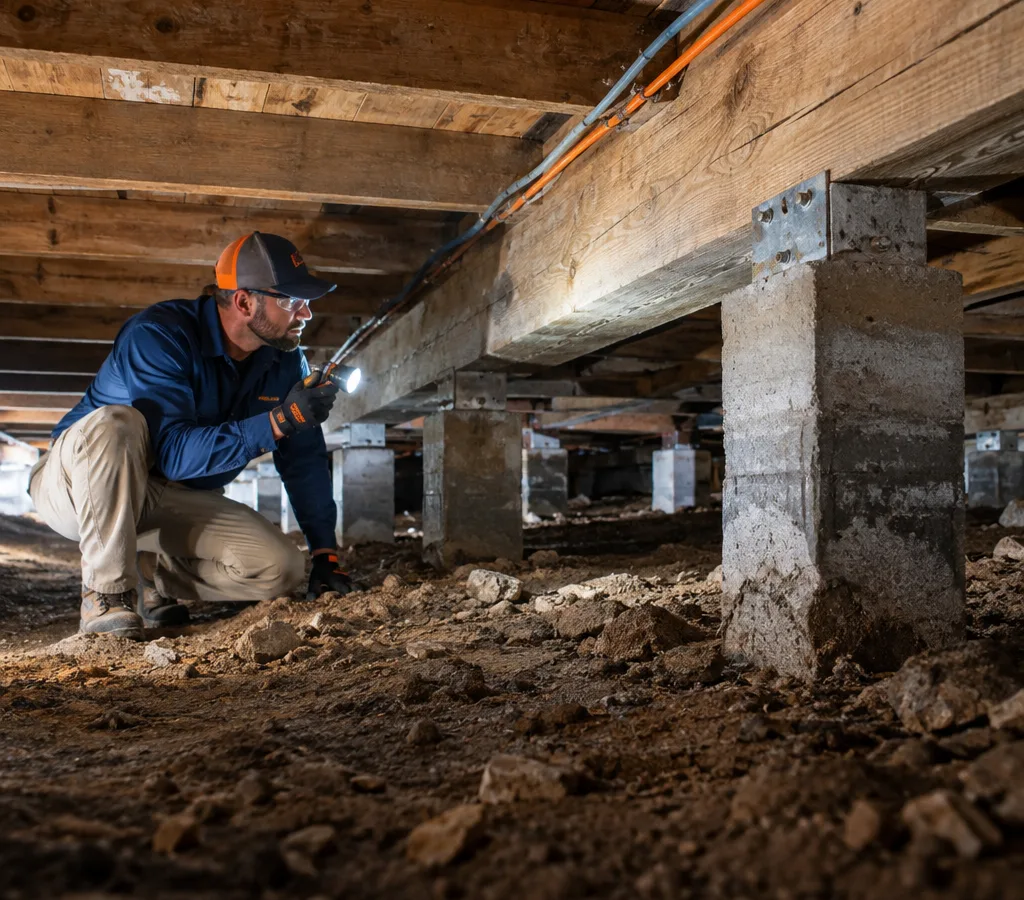
Pier and beam homes can be comfortable and serviceable, but they depend on many small structural points working together: piers, beams, joists, and the subfloor. When one area settles, shifts, or takes on moisture, you often feel it first as uneven floors, new cracks, or gaps that weren't there before.
For pier and beam foundation repair in Austin, our goal is to restore support and get the framing back to level without over-scoping the work. Foundation Repairs Austin TX focuses on what actually carries load: correcting pier height, tightening the beam and joist structure, and addressing conditions in the crawl space that keep causing movement.
Some issues are straightforward adjustments. Others need targeted rebuilding of supports. Either way, a good repair starts with a careful look underneath, not a guess from inside the living room.
A pier-and-beam foundation is visible and accessible, which is a big advantage. It also means problems can be localized, and the repair should match what's actually failing.
During an inspection we typically check:
Because this is Austin, we also pay attention to how the home is interacting with seasonal moisture changes. A repair that ignores moisture conditions under a raised structure can end up needing repeated re-leveling.
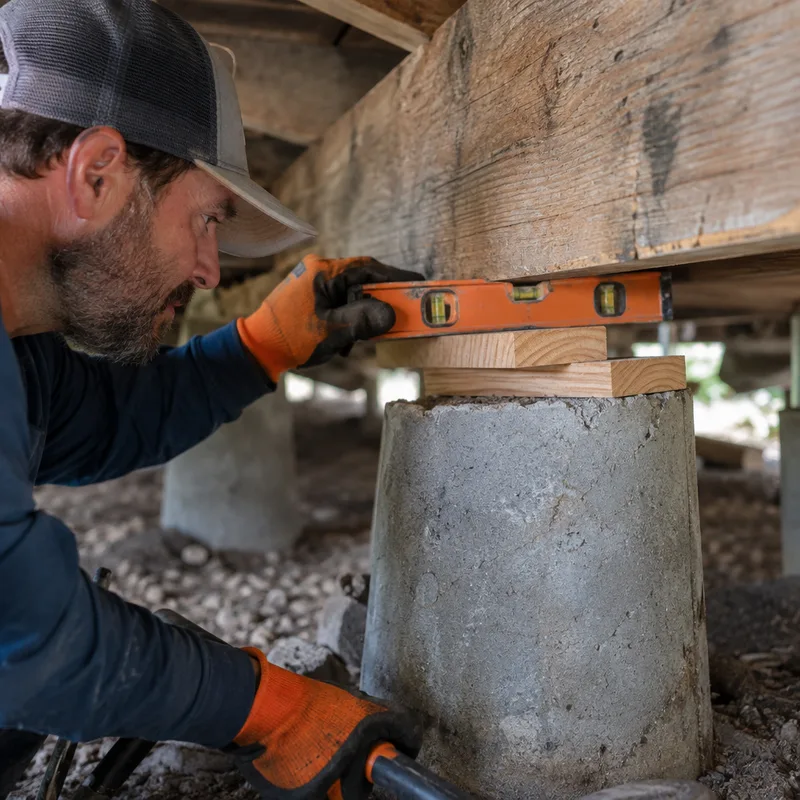
We identify whether the slope comes from settled piers, a dropped beam, or sagging joists, then correct the support at the source.
Often tied to undersupported spans or weakened framing. Repairs may include adding supports, sistering joists, or improving beam bearing.
Cosmetic symptoms usually track back to movement in the floor system. We focus on stabilizing structure before you patch and paint.
Out-of-level framing can rack door openings. After the structure is corrected, many doors return close to normal alignment.
We document moisture impact on supports and framing and recommend practical steps to keep the repair durable.
Stacked scraps and compressible shims can settle over time. We replace temporary fixes with proper bearing and support.
A measured process identifies what has moved, corrects the affected supports, and verifies the floor system after repair.
We access the crawl space, document support points and framing, and take level measurements to map where the floor system has dropped or shifted.
You get a clear explanation of what's causing the problem, what we recommend, and what alternatives look like when there is more than one valid approach.
Work may include adjusting and re-leveling at specific piers, rebuilding failed supports, improving beam bearing, and tightening the floor framing where needed.
We look for the factors that keep causing movement, especially moisture. If there are signs of plumbing leaks or persistent dampness, we'll tell you what to address next.
We re-check key elevations and walk you through what was corrected, what to monitor over time, and what to do before finishing repairs inside the home.
Pier and beam foundation repair in Austin typically ranges from $2,500 to $12,000, depending on how many support points need correction and whether framing repairs are required. Small, localized re-leveling may fall around $2,500 to $5,000, while broader re-leveling with rebuilt piers and added supports commonly lands in the $6,000 to $12,000+ range.
Final pricing depends on access to the crawl space, the number and type of piers, beam and joist condition, moisture or rot damage, and whether plumbing issues are contributing. The exact cost is confirmed after an on-site inspection and a written scope of work.
Pier-and-beam foundations are common in parts of Austin with older housing stock and in areas where raising the home improves access to utilities and ventilation. We regularly see repair needs driven by a mix of age, moisture management, and past alterations.
If you're comparing repair approaches across foundation types, our overview of foundation repair in Austin TX helps explain why the right fix depends on what's actually supporting the structure.
“We had a low spot in the hallway and two doors that stopped latching. The crew showed us exactly which piers had settled, re-leveled the floor, and explained what we should fix in the crawl space to keep it stable.”
Megan R.
“The estimate was detailed and matched what they found under the house. They didn't try to sell extra work, just addressed the supports that were failing and checked the levels again before they left.”
Carlos T.
Most pier-and-beam repairs take 1 to 3 days, depending on how many piers need adjustment or replacement and whether joist or beam repairs are included. Tight crawl space access and extensive moisture or rot remediation can extend the timeline.
Usually no, because the work is performed from the crawl space by adjusting support points and framing. Interior finishes may still show hairline cracks or trim gaps after leveling, so many homeowners wait to do cosmetic repairs until the structure has settled back in.
Common signs include sloping or bouncy floors, new drywall cracks, doors that stick, gaps at baseboards, and musty odors or visible dampness under the house. In Austin, seasonal moisture swings can make these symptoms appear gradually or worsen after heavy rain.
Re-leveling is one part of pier-and-beam foundation repair, but not always the whole job. If supports are failing, shims are compressing, or framing is deteriorated, the repair also includes rebuilding or reinforcing those structural elements so the new level holds.
Foundation repairs can improve clearance and reduce movement that stresses pipes, but they do not automatically repair leaking supply lines or drains. If we see signs of a leak contributing to settlement, we'll recommend addressing it promptly because ongoing moisture can undermine supports.
Many pier-and-beam problems are localized, so targeted repairs are often appropriate when measurements confirm the rest of the structure is stable. If multiple areas have dropped or supports are uniformly compromised, a broader leveling plan may be the better long-term choice.
Tell us what you're noticing and when it started. Foundation Repairs Austin TX will inspect the crawl space, take level readings, and provide a written scope so you can make a confident decision before any work begins.